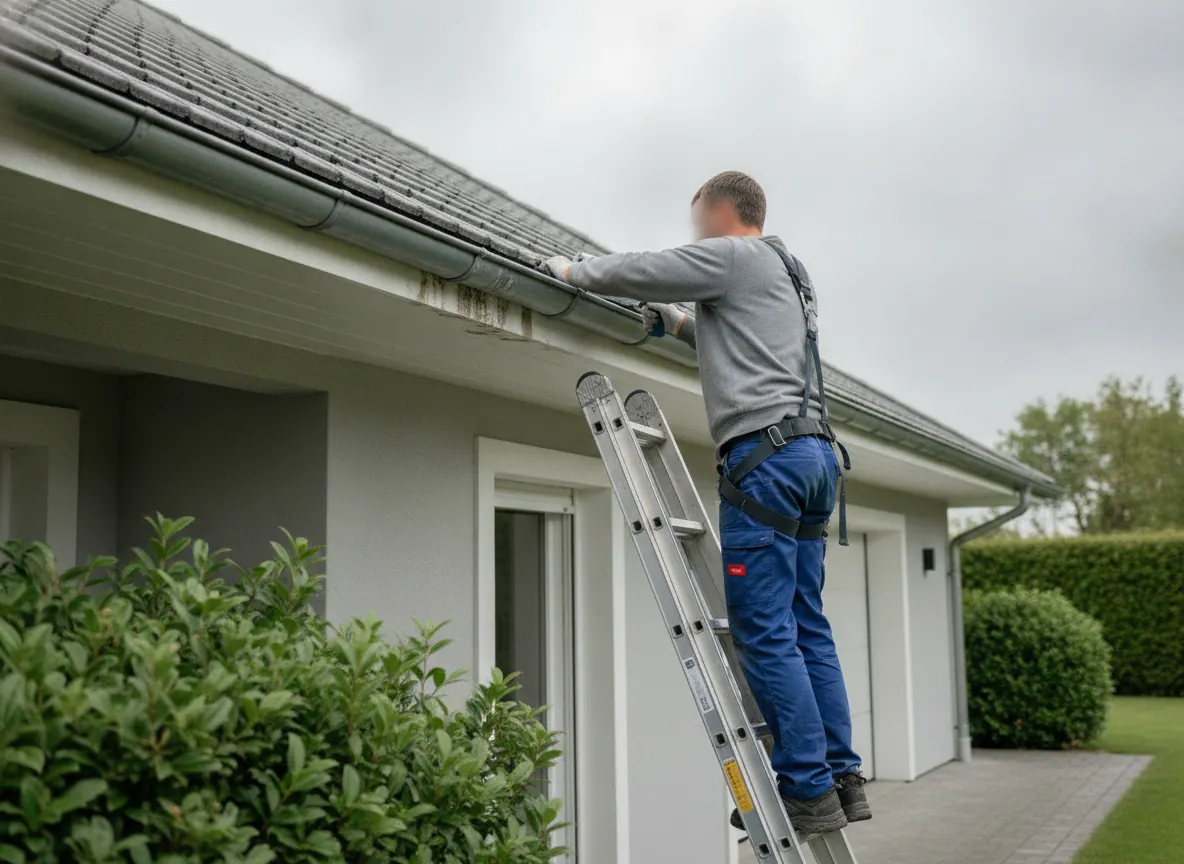
Can gutters be repaired, or do they need replacing?
Many problems can be repaired: leaking seams and end caps, loose hangers, a sagging section, a bad downspout or a run with the wrong pitch. Replacement makes more sense when leaks show up along many joints, the metal is bent or corroded in several places, the gutters are undersized, or the fascia behind them is rotted. Ask installers to price both options.
Why are my gutters sagging?
Sagging usually comes from hangers that have loosened or spread too far apart, gutters that stayed full of wet debris, or fascia boards that have softened so fasteners no longer hold. Ladders and falling limbs can bend runs too. An installer will check whether new hangers are enough or whether the board behind the gutter needs repair first.
How do I fix a leaking gutter seam?
Small leaks at corners, end caps and sectional joints are often cleaned, dried and resealed with gutter sealant, sometimes with a new strip or patch over the joint. If the same seam keeps leaking, or there are many seams on old sectional gutters, an installer may suggest replacing that run with seamless gutter. Leaks in the middle of a seamless run usually mean damage.
What should I do after storm damage to my gutters?
Photograph the damage first, then keep people away from hanging gutters and downed limbs. Get written quotes before paying anyone. Under La. R.S. 14:202.1, a contractor who takes payment and does no work for 45 days can be presumed to intend fraud, and price gouging is banned during declared emergencies (R.S. 29:732). This is general information, not legal advice.
How much does gutter repair cost?
Repair prices vary too much by job for a reliable range: resealing one corner is a small job, while re-hanging and re-pitching a long two-story run is not. For comparison, a Baton Rouge cost guide (HomeBlue, 2025) puts new seamless aluminum at $5.90–$10.30 per foot installed. An installer's on-site look gives the real price; these are estimates, not quotes.